


The Apothecary
Ashwagandha in South Africa: How to Use It Safely
Ashwagandha guide for South Africa: benefits, forms, timing, safety checks and One Life product picks.
Ashwagandha in 2026: How to Use South Africa's Favourite Adaptogen (Without Overdoing It)
By One Life Health Consultant · Written for South African shoppers, June 2026
Not sure which one?
Get a quick product pick
Your match
Need a hand?
Find the right supplement faster
Browse the relevant range or ask our team for a quick recommendation.
The short answer
Ashwagandha is the most-asked-for adaptogen in any South African health store, and for good reason — it has more human research behind it than almost any other herb. The most-evidenced extracts are KSM-66 and Shoden, both standardised to specific bioactives at clinically-studied doses. The cleanest premium pick on the One Life shelf is the BIOMAX Bio-Shoden® Ashwagandha 60 Capsules at R346.00. For a respected international brand at a fair price, the SOLGAR Ashwagandha Root Extract 60 Vegetable Capsules at R319.00 is the most-asked-for daily. For a budget-friendly powder format, the PHARMA GERMANIA Ashwagandha Root Cut Powder 75g at R103.51 is the cheapest entry point. Ashwagandha is well-tolerated by most healthy adults but is not appropriate during pregnancy, breastfeeding, or alongside thyroid or autoimmune medication without clinical input.

Table of contents
- What does ashwagandha actually do?
- Why is ashwagandha everywhere in 2026?
- Extracts vs powders, and the only two names to know
- Which ashwagandha fits you?
- Product comparison: what we actually stock
- A closer look at each option
- Shopper checklist before you add to cart
- Store-floor notes from our consultants
- Who should skip ashwagandha?
- FAQ
- Related reading from One Life
- References
What does ashwagandha actually do?
Withania somnifera, known in English as ashwagandha and traditionally as "Indian winter cherry", is a small shrub used in Ayurvedic medicine for over three thousand years. The English name "ashwagandha" translates loosely as "smell of the horse" — a reference to both the strong smell of the root and the traditional claim that it lends strength.
In modern research, ashwagandha is classed as an adaptogen — a herb that helps the body adapt to stress without sedating it or stimulating it. The active compounds (withanolides) appear to modulate the body's hypothalamic-pituitary-adrenal (HPA) axis, which is the main system that controls the stress response and cortisol release. The result, in published human trials, is reductions in measured cortisol, improvements in perceived stress and sleep quality, and (in some studies) modest improvements in athletic performance.
This is one of the better-studied herbs in the supplement aisle. The Cochrane Library has reviewed it; the NIH lists it in their herbal monographs; multiple randomised trials have been published in peer-reviewed journals. The challenge is not whether ashwagandha works — it is which product on the shelf is delivering the studied extract at the studied dose.
Why is ashwagandha everywhere in 2026?
- Stress is the dominant wellness category. South African shoppers across every age group are buying for stress, sleep and mood — and ashwagandha is the herb with the most evidence in that conversation.
- It is not a sedative. Unlike valerian or kava, ashwagandha does not knock you out. It is taken throughout the day, often morning and evening, and works on the underlying stress response rather than the symptom.
- The research base has grown fast. Multiple trials in the last decade have looked at cortisol, sleep, exercise recovery, fertility, testosterone and even cognitive function. The evidence is strongest for stress and sleep; thinner for the more dramatic claims.
- Standardised extracts changed the conversation. KSM-66 and Shoden are two patented, clinically-studied ashwagandha extracts that delivered consistent results in trials. Generic ashwagandha powder is a different product, even when the herb is the same.
- Stress timing in South Africa. Many of our customers come in around June each year — the financial year-end for many businesses, the deepest part of winter, and the point when the start-of-year resolutions have started to fade. Ashwagandha is one of the most-asked-for purchases during this window.
Extracts vs powders, and the only two names to know
- KSM-66 — A standardised ashwagandha extract produced by Ixoreal, used in the largest body of human trials. Standardised to at least 5% withanolides. The typical clinical dose is 300 to 600 mg per day.
- Shoden (also Bio-Shoden) — A newer high-potency extract standardised to 35% withanolide glycosides. The clinical doses are lower because the concentration is higher (120 to 240 mg per day is typical). BIOMAX uses this extract in their One Life-stocked product.
- Sensoril — A third clinically-studied extract, less common in South Africa. Standardised to 10% withanolides with a different profile to KSM-66.
- Plain root powder (organic or otherwise). The traditional Ayurvedic format. Useful, but the active content is variable and the dose-per-serving is much higher than concentrated extracts. Budget-friendly; less consistent.
- Ashwagandha tea. Often combined with tulsi or other adaptogens. Pleasant, mild, ritual-based. Not a substitute for an extract if you have a specific clinical goal.
Which ashwagandha fits you?
-
You want the highest-potency clinically-studied extract — BIOMAX Bio-Shoden® Ashwagandha 60 Capsules at R346.00. This is the Shoden extract used in the recent generation of trials.
-
 You want a respected international brand at a sensible price — SOLGAR Ashwagandha Root Extract 60 Vegetable Capsules at R319.00 is the option most customers ask for by name.
 -
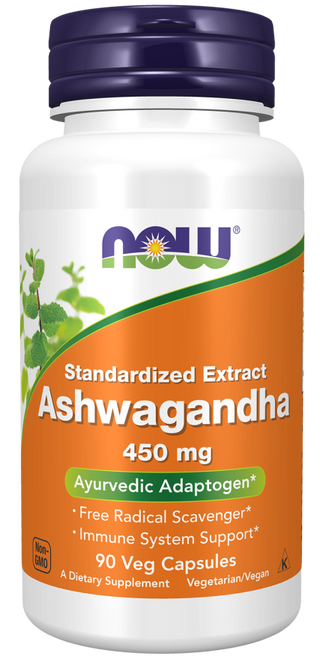
 You want a higher daily count for a longer protocol — NOW Ashwagandha 450 mg 90 Veg Capsules at R429.99 gives you three months at one a day.
 -
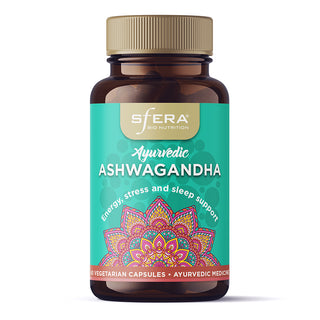
 You want a SA-formulated capsule with a clean ingredient list — NATROCEUTICS Ashwagandha Bioactive 60 Capsules at R327.00, SFERA Ashwagandha 60 Capsules at R325.31 or YOUR WELLBEING Ashwagandha 60 Capsules at R363.49 are all good mid-range picks.
 -
 You want an organic powder for cooking, smoothies or self-mixing protocols — SOARING FREE Ashwagandha Organic 77g at R261.00 or the 90-capsule version at R298.00 are the certified-organic options.
 -
 You want the cheapest possible entry to ashwagandha — PHARMA GERMANIA Ashwagandha Root Cut Powder 75g at R103.51. A bare-bones bulk powder, lowest cost-per-gram in the comparison.
 -
 You want a gentle daily ritual rather than a clinical-strength supplement — ORGANIC INDIA Tulsi Green Tea Ashwagandha 25 Tea Bags at R120.22 is the tea-format option.
 - You are pregnant, breastfeeding, on thyroid medication, or managing an autoimmune condition — please speak to your clinician first. Ashwagandha is not appropriate in some of these contexts.
A closer look at each option
BIOMAX Bio-Shoden® Ashwagandha 60 Capsules (R346.00) — Bio-Shoden is the high-potency South African branded format of the Shoden extract. Standardised to 35% withanolide glycosides, meaning a much smaller per-capsule dose delivers the same clinical effect as larger doses of less-concentrated extracts. The 60-capsule pack is a two-month supply at one a day. This is the option I would point most customers to who want a clinical-strength daily.
SOLGAR Ashwagandha Root Extract 60 Vegetable Capsules (R319.00) — Solgar is a long-standing international brand with strong quality control. Their Ashwagandha Root Extract is the most-asked-for international product in this category at One Life. A reasonable everyday daily; not the highest-potency option but a name South African customers recognise and trust.
NOW Ashwagandha 450 mg 90 Veg Capsules (R429.99) — NOW is one of the largest US health-supplement brands and is widely stocked in South Africa. The 90-capsule pack delivers three months at one a day, which lowers the per-day cost meaningfully. A good fit for someone committing to a longer protocol.
NATROCEUTICS Ashwagandha Bioactive 60 Capsules (R327.00) — Natroceutics is the South African practitioner brand also behind the NMN Advanced and Glutathione SOD Advanced products. Their Ashwagandha Bioactive uses a standardised extract and sits in the mid-price tier. A solid option for customers already buying from the Natroceutics range.
SFERA Ashwagandha 60 Capsules (R325.31) — Sfera Bio Nutrition is a respected SA brand with clear labelling and a strong practitioner network. The product line is consistent on quality and price; a fair mid-range choice for shoppers who want a SA-formulated option without paying premium tier pricing.
YOUR WELLBEING Ashwagandha 60 Capsules (R363.49) — Your Wellbeing is an integrative-medicine-favoured South African brand. Their Ashwagandha is a clean single-ingredient capsule, often paired in store with their adrenal-support and stress-related products for a more complete protocol.
SOARING FREE Ashwagandha Organic 77g powder (R261.00) and 90 Capsules (R298.00) — Soaring Free Superfoods is the certified-organic option in this comparison. The 77g powder format is the lowest cost-per-day option among the better-quality products. The 90-capsule format is convenient if you do not want to scoop powder daily. Both are organic and the brand has a strong following among health-conscious shoppers.
PHARMA GERMANIA Ashwagandha Root Cut Powder 75g (R103.51) — The cheapest entry point in this category by some margin. A bare-bones cut-root powder, suitable for making your own teas or adding to other formulations. Active content per gram is lower than concentrated extracts, but at R103.51 the cost-per-experience is unbeatable. A reasonable place to start if you are testing the herb before committing to a clinical-strength format.
ORGANIC INDIA Tulsi Green Tea Ashwagandha 25 Tea Bags (R120.22) — Organic India is a well-known Ayurvedic-origin brand. This tea combines tulsi (holy basil, another adaptogen) with ashwagandha in a green tea base. The clinical dose of ashwagandha per cup is low, but as a daily ritual for someone who is more interested in the experience than the milligrams, it is a pleasant entry point.
Shopper checklist before you add to cart
- Check the extract. KSM-66, Shoden or Bio-Shoden tell you which clinically-studied form is inside. Generic "ashwagandha root extract" is fine — it is just less specific.
- Match the dose to the studies. Most ashwagandha trials use 300 to 600 mg of standardised extract per day for stress, or 120 to 240 mg of Shoden. Read the bottle and aim for a comparable daily intake.
- Choose timing deliberately. Many users take ashwagandha twice daily (morning and evening). Some prefer evening only for sleep benefits. The trials usually use twice-daily dosing.
- Give it a fair trial. A meaningful trial is six to twelve weeks of consistent daily use. Some users feel changes inside two weeks; for many, the benefit emerges later.
- Take a break. Most Ayurvedic protocols cycle ashwagandha — three months on, one month off — rather than indefinite continuous use. The modern research does not strongly support either approach over the other; cycling is a reasonable conservative default.
- Do not combine with other strong sedatives. Ashwagandha is mild, but combining with benzodiazepines, sleeping tablets or alcohol is unwise without clinical input.
- Skip it if you have thyroid disease, an autoimmune condition or are pregnant/breastfeeding. The evidence in these contexts is mixed and the responsible default is to wait for a clinician's guidance.
Store-floor notes from our consultants
Three patterns I see most weeks at One Life:
- The biggest mistake is underdosing for too short a time. Customers buy a 60-capsule bottle, take one capsule a day for three weeks, and conclude it does not work. The studies that show meaningful effects on cortisol and sleep usually run eight to twelve weeks. Commit to the trial.
- People buy ashwagandha when they need to fix their sleep. Ashwagandha is genuinely helpful for stress-driven sleep, but it is not a sleeping tablet. If you cannot fall asleep because of stimulants, screens or shift work, the fix is the input — not the supplement.
- The June stress window is real in our stores. South African financial year-ends, end-of-school-term marking, deepest winter — June and July are when this product sees its biggest reorder volume.
I also remind customers that the basics support adaptogens. Consistent bedtime, daylight exposure within an hour of waking, two or three cardio sessions a week, reduced caffeine after noon, and a real evening wind-down do more than any single supplement. Ashwagandha amplifies a good routine; it does not replace one.
Who should skip ashwagandha?
This article is general consumer information, not medical advice. Ashwagandha supplements sold in South Africa are regulated as complementary medicines by SAHPRA. Most healthy adults tolerate ashwagandha well — mild gastrointestinal upset is the most common side effect and usually resolves in the first week. Please do not start ashwagandha without speaking to a healthcare professional if any of the following apply:
- You are pregnant or breastfeeding. Traditional Ayurvedic medicine and current safety guidance both caution against ashwagandha in pregnancy.
- You have a thyroid condition or are on thyroid medication. Ashwagandha can alter thyroid hormone levels. The interaction is real, even if the effect is small.
- You have an autoimmune condition (lupus, rheumatoid arthritis, multiple sclerosis, type 1 diabetes). Adaptogens can modulate immune activity; the responsible default is clinical input.
- You are on sedatives, anxiety medication or anti-depressants. Combining adaptogens with central nervous system medications is a conversation for your prescriber.
- You have liver disease. Rare case reports of liver enzyme changes have been published; check with your hepatologist.
- You are under 18 years old.
For most healthy adults, the typical effective dose is 300 to 600 mg of a standardised root extract per day (or 120 to 240 mg of Bio-Shoden / Shoden), taken consistently for at least eight weeks.
FAQ
How long does ashwagandha take to work?
Some people notice calmer evenings or better sleep within a few weeks. More meaningful stress-support effects usually need consistent use.
Should ashwagandha be taken morning or evening?
Evening can suit sleep-focused shoppers, while morning can suit daytime stress support. Start with the timing that matches your main goal.
Is ashwagandha a sedative?
No. It is usually positioned as an adaptogen, not a sleeping tablet. Some people still feel calmer or drowsy, so start cautiously.
Can I combine ashwagandha with other adaptogens?
Many people do, but it is cleaner to start one product at a time so you can tell what is helping and what is not.
Can ashwagandha interact with medication?
It can be unsuitable with some medicines or health conditions, especially thyroid, pregnancy, autoimmune or psychiatric contexts. Ask a qualified healthcare professional first.
Related reading from One Life
- Sleep and Cortisol Supplements in South Africa
- Magnesium Glycinate vs Citrate vs Orotate
- Best Supplements That Actually Work in 2026
- Best Iron and Energy Supplements for Women in South Africa
- Perimenopause Natural Support Guide
Health consultant review
Reviewed by the One Life Health consultants, June 2026. This article is editorial guidance written for South African shoppers and is updated when product pricing, stock or label evidence changes. It is not a substitute for advice from your GP, endocrinologist or qualified healthcare professional.
Medical disclaimer
This article is general consumer information, not medical advice. Ashwagandha is not intended to diagnose, treat, cure or prevent any disease, including anxiety, depression, insomnia or thyroid disorders. Please consult your GP, endocrinologist or qualified healthcare professional before starting ashwagandha if you are pregnant, breastfeeding, on thyroid or autoimmune medication, on antidepressants or sedatives, or living with chronic liver disease.
References
- PubMed research abstract
- PubMed research abstract
- National Institutes of Health, National Center for Complementary and Integrative Health. Ashwagandha
- Cochrane Library. Cochrane Reviews on adaptogens and herbal supplements for stress and sleep
- South African Health Products Regulatory Authority (SAHPRA)
From the apothecary shelf
A few products we'd hand a customer asking for a starting point. Not a paid placement — these are what we actually take, recommend, or keep at the front of the shelf.