


The Apothecary
Gut Health Supplements That Actually Work — SA Guide (2026)
Gut health supplements are one of the most searched wellness categories in South Africa — but which ones are worth your money? This practical 2026 guide breaks down probiotics, prebiotics, digestive enzymes, and fermented options available locally.
Reviewed by the One Life Health consultants — Updated July 2026
Not sure which one?
Get a quick probiotic pick
Your match
Probiotics, prebiotics, and enzymes aren't the same thing
These three get lumped together as "gut health," but they do different jobs, and knowing which one fits your situation makes a real difference.
- Probiotics are live bacterial cultures — think Lactobacillus and Bifidobacterium species — that top up and support the balance of your gut flora. They're the ones most people mean when they say "probiotic."
- Prebiotics are fibres that feed the good bacteria already living in your gut. You can get these from food (onions, garlic, oats, bananas) as well as from supplements, and they work alongside probiotics rather than replacing them.
- Digestive enzymes (amylase, lipase, protease, and others) help break food down at the point of eating. These are useful for people who feel heavy, bloated, or uncomfortable after specific meals, and they act quickly rather than needing weeks of use to notice anything.
If you're not sure which one applies to you: ongoing bloating and irregularity usually points to probiotics/prebiotics used consistently; discomfort tied to specific meals (rich, fatty, or large meals) points more to enzymes taken with food.
Strains matter more than the word "probiotic" on the front of the box
Not all probiotics do the same thing, because different strains occupy different niches in the gut. Products built around Lactobacillus acidophilus (an "acidoflora" type formula) and those built around Bifidobacterium species (a "bifidoflora" type formula) aren't interchangeable — they're supporting different parts of the gut flora picture. If a product you've used before worked well, that's more useful information than switching to whatever's on special, since strain consistency tends to matter for how your gut responds.
Realistic timelines
Enzymes work meal by meal — you'll generally know within a day or two whether one is helping with a specific type of food. Probiotics are a different story: they need consistent daily use, and most people need at least one to two weeks before noticing any change in comfort, with a fuller sense of whether it's working typically taking four to eight weeks. Gut flora doesn't rebalance overnight, and stopping and starting different products every few days makes it much harder to tell what's actually helping.
Storage and quality — what actually matters when choosing
- Check whether the product needs refrigeration. Some probiotic strains are shelf-stable; others need to stay cold to keep the live cultures viable. Follow the label.
- A high CFU count on the front of the pack isn't automatically better than a lower count with well-matched, well-studied strains — don't let the biggest number be the only deciding factor.
- If you're taking a course of antibiotics, probiotics are commonly used to support the gut flora during and after the course — timing them a couple of hours apart from the antibiotic dose is the general practice, but check with your pharmacist for your specific medication.
Being honest about what these products can and can't do
Supplements in this category can support day-to-day digestive comfort, help maintain a balanced gut flora, and ease occasional bloating or irregularity. They are not a treatment for IBS, inflammatory bowel disease, or any other diagnosed digestive condition — those need proper medical assessment and management, and a supplement can sit alongside that care rather than replace it.
When to see a doctor
Please see a doctor rather than reaching for a supplement first if you experience any of the following:
- Blood in your stool, or black/tarry stools
- Unexplained weight loss
- Persistent or severe abdominal pain
- Fever alongside digestive symptoms
- Symptoms that don't improve, or that keep coming back, over several weeks
These need proper diagnosis — a supplement is not the right first response to any of them.
How to introduce a new product
Start with one product at a time rather than stacking a probiotic, a prebiotic, and an enzyme all at once — it makes it far easier to tell what's actually helping. Some people notice mild, temporary bloating or gas in the first few days as their gut flora adjusts; this usually settles. If it doesn't, or gets worse, stop and speak to a healthcare professional. As always, check with a doctor before starting anything new if you're pregnant, breastfeeding, managing a chronic condition, or on medication.
A few places to start
-
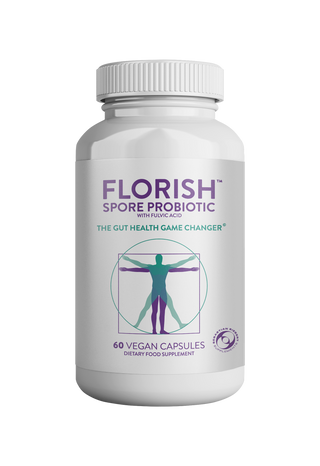
 FLORISH – Spore Probiotic with Fulvic Acid (spore-based, one of our best sellers)
 -
 METAGENICS – UltraFlora Balance Probiotic (Lactobacillus + Bifidobacterium blend)
 -
 BIOFLORA CC – Bifidoflora (Bifidobacterium-based)
 -
 VIVID HEALTH – GUT HEALTH Clove (our house brand's herbal gut support)
Browse the wider range under probiotics and gut health and digestion. Check each product page for the current label and price before you buy.
Visit us in-store
- Centurion (Flagship): 117 Galway Ave, Hennopspark, Centurion, 0157 — 076 913 5059
- Glen Village (Pretoria East): Glen Village Center South, Cnr Solomon Mahlangu Dr & Olympus Dr, Faerie Glen, Pretoria, 0081 — 066 022 7457
- Edenvale (Johannesburg): Shop 7, Green Valley Shopping Centre, Stoneridge Dr, Greenstone Hill, JHB 1609 — 077 356 0173
Frequently asked questions
Can a probiotic treat IBS?
No — IBS is a medical diagnosis that needs a doctor's involvement. Some people find a probiotic helps with day-to-day comfort alongside proper medical management, but it isn't a treatment on its own.
Should I take a probiotic and a digestive enzyme together?
You can, since they do different jobs, but introduce them one at a time first so you know what each one is actually contributing.
How long should I try a probiotic before deciding it isn't working?
Give it four to eight weeks of consistent daily use. Anything shorter usually isn't a fair test.
Do I need to keep probiotics in the fridge?
Depends on the strain and formulation — check the label on your specific product, as some are shelf-stable and others aren't.
From the apothecary shelf
A few products we'd hand a customer asking for a starting point. Not a paid placement — these are what we actually take, recommend, or keep at the front of the shelf.