


The Apothecary
Natural Sleep Aids & Best Sleep Supplements in SA (2026)
Struggling to wind down at night? You're not alone — sleep is one of the most common wellness concerns among South Africans.
Reviewed by the One Life Health consultants — Updated July 2026
Not sure which one?
Get a quick product pick
Your match
Need a hand?
Find the right supplement faster
Browse the relevant range or ask our team for a quick recommendation.
Sleep is usually a routine problem before it's a supplement problem
Sleep is one of the things customers ask me about most at the counter. Before we talk about what to add to a routine, it helps to be honest: no capsule fixes a sleep schedule that's fighting itself. The products below can genuinely take the edge off a wound-up evening, but they work best layered on top of decent sleep habits, not instead of them.
Get the fundamentals right first
- Keep a consistent wake time, even on weekends — this anchors your body clock more than almost anything else.
- Get daylight early in the day where you can. Even ten minutes outside signals to your body that the day has started.
- Dim the lights and screens in the last hour before bed. Bright light in the evening, especially from phones and laptops, delays the body's natural wind-down.
- Watch caffeine after midday. It has a longer half-life than most people expect, and a 3pm coffee can still be working against you at 10pm.
- Alcohol may help you fall asleep faster but tends to fragment sleep later in the night, so it isn't a reliable sleep aid even though it can feel like one in the moment.
- Keep the room cool, dark, and used mainly for sleep. A consistent wind-down routine, done in the same order each night, trains your body to recognise that it's time to switch off.
If those basics are already solid and sleep is still a struggle, that's when it's worth looking at what a supplement can add.
Where magnesium fits
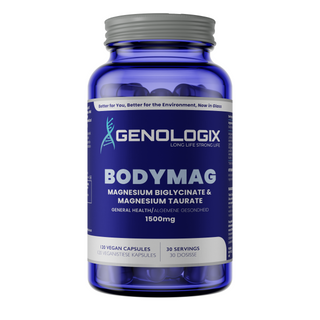
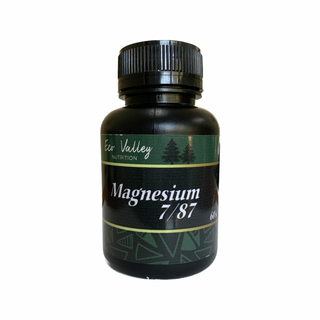
Magnesium is involved in the way muscles and the nervous system relax, and it's a mineral a lot of South African diets fall short on. Forms like magnesium glycinate or bisglycinate tend to sit more gently on the stomach than magnesium oxide, which is why you'll see them in most sleep-focused formulas. It isn't a sedative — think of it as removing a barrier to winding down rather than switching you off. Give it two to four weeks of consistent, daily use before deciding whether it's doing anything for you.
Where L-theanine fits
L-theanine is an amino acid naturally found in tea. People generally use it to quieten a racing or over-alert mind without feeling drowsy the next morning, which makes it useful for the "tired but wired" feeling that keeps people staring at the ceiling. It can be taken in the evening as part of a wind-down routine.
Where chamomile and traditional herbal blends fit
Chamomile has a long history of traditional use for relaxation, usually as a tea or a liquid tincture. Combination herbal formulas — the kind you'll find from brands like A.Vogel — often pair a few traditionally-used calming herbs together. These tend to suit people who want a gentler, more habit-forming ritual (a cup of tea before bed) rather than a capsule.
A note on melatonin
Melatonin comes up a lot, usually because people have read about it online or used it while living or travelling overseas. It's worth knowing that in South Africa, melatonin is a Schedule 3 substance — it isn't sold over the counter the way it is in the US or UK, and a pharmacist or doctor needs to be involved. If you think melatonin might suit your situation, particularly for jet lag or shift work, that's a conversation to have with your pharmacist or GP rather than something to self-select off a shelf.
How to choose and use a product
- Start with one product at a time so you can actually tell what's helping.
- Check the label for the exact dose per serving rather than a vague "proprietary blend."
- Take it at the same time every evening — consistency makes it much easier to judge whether it's working.
- Give it two to four weeks before changing course. Sleep supplements are rarely a one-night fix.
When to see a doctor instead
Occasional restless nights are normal. Speak to your doctor if insomnia persists for more than a few weeks despite good sleep habits, if you snore heavily or wake up gasping (this can point to sleep apnoea, which needs proper assessment), if low mood or anxiety is driving the sleeplessness, or if pain is what's keeping you up. If you're pregnant, breastfeeding, managing a chronic condition, or taking chronic medication, check with a healthcare professional before adding any new supplement to your routine.
A few places to start
A short list of products we carry that fit the categories above — check each product page for the current label and price before you buy:
-
 WILLOW – Magnesium Glycinate 120 Capsules (the form our counter recommends for evenings)
 -
 VERHAKI NUTRITION – Glycine 250g Powder
-
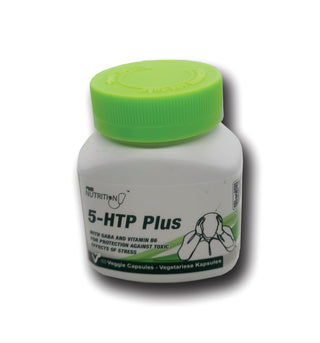
 ECO VALLEY – 5-HTP 60 Capsules
-
 A.VOGEL – Dormeasan
-
 A.VOGEL – Nervousness Insomnia Formula
-
 A.VOGEL – Neuroforce Formula
You can browse the wider range under sleep and relaxation and vitamins and minerals online or in any of our stores.
Visit us in-store
- Centurion (Flagship): 117 Galway Ave, Hennopspark, Centurion, 0157 — 076 913 5059
- Glen Village (Pretoria East): Glen Village Center South, Cnr Solomon Mahlangu Dr & Olympus Dr, Faerie Glen, Pretoria, 0081 — 066 022 7457
- Edenvale (Johannesburg): Shop 7, Green Valley Shopping Centre, Stoneridge Dr, Greenstone Hill, JHB 1609 — 077 356 0173
Frequently asked questions
How long before a sleep supplement makes a difference?
Most people need two to four weeks of consistent use before they can honestly judge whether something is helping. If your sleep hygiene is inconsistent, it will take longer and the results will be harder to read.
Can I combine magnesium, L-theanine, and a herbal tincture?
Often yes, but introduce them one at a time so you know what's actually doing the work, and check with a pharmacist if you're on chronic medication.
Is melatonin available at One Life?
Melatonin is a Schedule 3 medicine in South Africa and isn't sold as an open-shelf supplement. Speak to your doctor or pharmacist if you're considering it.
Do I need to take these every night?
Follow the label directions for the specific product. Some people use magnesium nightly as part of a routine; others use a herbal tincture on particularly wound-up nights only.
From the apothecary shelf
A few products we'd hand a customer asking for a starting point. Not a paid placement — these are what we actually take, recommend, or keep at the front of the shelf.