

The Apothecary
Joints & Mobility: Move Without Compromise
A practical joint-support guide for stiffness, mobility and recovery, with clear limits on when supplements are not enough.
If you wake up stiff and need twenty minutes to feel human; if the recovery from a Saturday hike isn't what it was at 35; if a former rugby injury is finally telling you about itself — you're in the right place. This guide is what 30 years on the shop floor in Centurion has taught us about what actually helps your joints, in what order, and where to stop spending and start moving.
Not sure which one?
Get a quick product pick
Your match
Need a hand?
Find the right supplement faster
Browse the relevant range or ask our team for a quick recommendation.
Who this is for
Early osteoarthritis (knees, hands), morning stiffness that takes twenty minutes to ease, recovery slowing in your 40s and 50s, old injuries waking up again. If that's the pattern, read on. Acute injuries need a physiotherapist, not a supplement shelf. Inflammatory arthritis (rheumatoid, psoriatic) needs a rheumatologist.
The short version
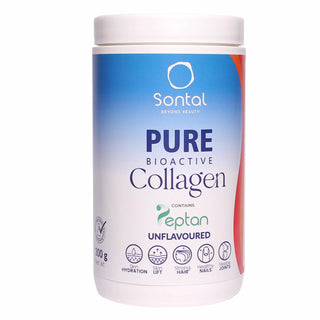
- Collagen peptides 10–15 g daily — the most up-to-date evidence for cartilage support.
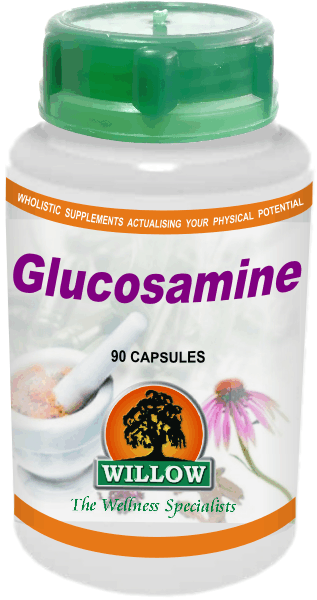
- Glucosamine sulphate 1500 mg daily — works in roughly half of users, give it 3 months.
- Turmeric (curcumin with piperine or phosphatidylcholine) 500–1000 mg curcuminoids daily — for inflammation.
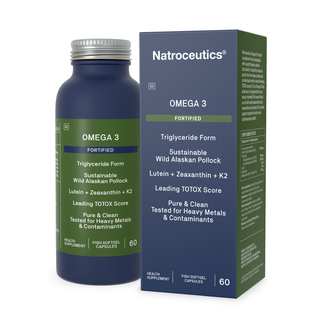
- Omega-3 2–3 g EPA+DHA — supports a healthy inflammatory response across the body.
- MSM 1500–3000 mg daily — the reliable third-tier add-on once the foundation is in place.
- Vitamin D3 — low D worsens joint pain. Most South Africans test low.
Collagen peptides — the modern foundation
The old joint stack was glucosamine and chondroitin. The new joint stack leads with hydrolysed collagen peptides (sometimes called collagen hydrolysate). 10–15 g daily improves joint comfort and supports the cartilage matrix. The mechanism: collagen peptides signal cartilage cells (chondrocytes) to upregulate collagen synthesis.
Bovine and marine sources both work. Bovine is cheaper and more common. Marine is gentler if you have gut sensitivities. Take it any time of day — adding a scoop to morning coffee is the habit that sticks. Vitamin C taken with it supports collagen synthesis.
What many customers choose: bovine peptides stirred into morning coffee, every day — the one many people find easiest to stay consistent with.
Glucosamine — still useful, for the right user
Glucosamine sulphate at 1500 mg daily has a long research history around joint comfort in knee osteoarthritis; some people find it helps and others don't — give it 12 weeks and stop if there's no difference. Glucosamine hydrochloride (the cheaper form) has weaker evidence than the sulphate form — read the label.
Give it 12 weeks. If there's no difference, stop. Often combined with chondroitin (which has weaker evidence but no harm) and MSM (which has modest evidence).
What we'd suggest: if you're under 50 with no diagnosed osteoarthritis, start with collagen first. If you're over 50 with diagnosed knee OA, glucosamine sulphate has a long research history around joint comfort — worth a 12-week trial alongside collagen and whatever your doctor manages.
Turmeric/curcumin — inflammation
Curcumin (the active compound in turmeric) is studied for supporting a normal inflammatory response, at doses around 500–1000 mg/day of curcuminoids. The problem is absorption — straight turmeric is mostly excreted. You want a curcumin extract with piperine (black pepper, boosts absorption 20×), phosphatidylcholine (Meriva), or a liposomal formulation. The cheapest turmeric capsule on the shelf is usually a waste.
Don't combine high-dose curcumin with blood thinners (warfarin, apixaban) without medical input — it has mild anti-platelet activity.
What we keep on the shelf: Meriva-based curcumin (phosphatidylcholine-bound) is what we'd reach for first. The piperine-blended capsules are the budget option, not the inferior one — they work, they just hit harder on an empty stomach.
Omega-3 — the whole-body baseline
Fish oil at 2–3 g of combined EPA+DHA is studied for supporting a healthy inflammatory response and supports joints, cardiovascular, and brain — three for the price of one. Choose a brand with third-party purity certification — fish oils vary widely in quality. Vegan? Algal omega-3 works equally well.
What many customers choose: a higher-EPA blend (2:1 EPA:DHA) for the joint and mood effect. If you can taste the fish on the burp, the oil is oxidised — switch brand.
MSM — the third-tier add-on
Methylsulphonylmethane (MSM) at 1500–3000 mg daily has modest but real evidence for joint pain reduction, particularly when paired with glucosamine. It's not the leader — collagen and curcumin do more heavy lifting — but for the right person it's the addition that finally tips the stack.
When we'd add it: if you've been on collagen + curcumin + omega-3 for 12 weeks and you're 70% of the way there, MSM is the cleanest add-on.
Vitamin D — the often-missed factor
Vitamin D deficiency worsens joint pain and inflammation. If you haven't had levels checked, get them done — most South Africans test low despite the sunshine, partly because we sensibly avoid midday sun. 4000 IU daily brings most people to optimal within three months.
Worth checking your levels with your doctor if joint pain is ongoing.
What supplements can't fix
Loaded muscles support joints. If your quads are weak, no amount of glucosamine will save your knees. The single highest-impact intervention for joint health in middle age is not a supplement — it's strength training, twice a week, gently progressing. A good physio or biokineticist is worth ten supplement bottles. Use supplements to support the work, not replace it.
When this isn't a supplement problem
Joint swelling with heat and redness; joint pain with fever; sudden severe joint pain in one joint; morning stiffness lasting more than 90 minutes; symmetrical pain in small joints (hands, feet); family history of rheumatoid or psoriatic arthritis. Any of those — see a rheumatologist or GP. We'll tell you the same thing across the counter: this isn't supplements, it's medicine.
Common questions
How long should I try a joint stack?
Give it 8 to 12 weeks. If nothing changes, do not keep adding products.
Can I combine collagen and glucosamine?
Yes, but start with one clear foundation and track symptoms. More products are not automatically better.
When do I need specialist care?
Hot swelling, fever, sudden severe pain or long morning stiffness needs a doctor, physiotherapist or rheumatology review.
References
- NIH Office of Dietary Supplements: Glucosamine and chondroitin
- NIH Office of Dietary Supplements: Omega-3 fatty acids
- NIH Office of Dietary Supplements: Vitamin D
Shop this at One Life Health
-
 HEALTH NUT SOUTH AFRICA - Restore Collagen 1Kg — Hydrolysed collagen peptides to stir into morning coffee — the modern foundation for supporting the cartilage matrix.
 -
 NOW® - UC-II® Type II Collagen - 60 Capsules — A low-dose type II collagen capsule if you would rather not manage a powder scoop.
 -
 VIVID HEALTH - VIVID BODY - Flexijoint Advanced 120 Capsules — Our house-brand joint blend that brings the usual mobility-support ingredients into one bottle.
 -
 BIOMAX® - Bio-Curcumin® Advanced - 60 Capsules — A well-absorbed curcumin — the form worth choosing over a plain turmeric capsule.
 -
 NATROCEUTICS® SA - Curcumin Complete 30 Capsules — Another absorption-optimised curcumin for those who prefer it over the bovine collagen route.
Our top picks for this guide
A few products we'd hand a customer asking for a starting point. Not a paid placement — these are what we actually take, recommend, or keep at the front of the shelf.