


The Apothecary
Benefits of Collagen for Your Health
Collagen is the most abundant protein in the human body, supporting everything from skin elasticity to joint comfort.
Skin feeling like biltong in the winter air, knees complaining on the stairs, nails snapping the moment they grow? Before you buy a separate product for each of those, here's a fact worth knowing: from around age 25, your body produces 1–1.5% less collagen every year — and all three of those complaints trace back to it.
Not sure which one?
Get a quick product pick
Your match
Need a hand?
Find the right supplement faster
Browse the relevant range or ask our team for a quick recommendation.
Collagen is one of the few supplements we recommend with real confidence, because the research is genuinely strong — but it's also one of the most mis-sold. So here's the honest guide: what it actually does, which type to buy for which goal, the dose that the studies actually used, and how long before you should expect to see anything.
What we'd suggest
- Dose: 10g of hydrolysed collagen peptides daily — stirred into your morning coffee or smoothie. It's virtually tasteless.
- For skin, hair and nails: marine collagen (Type I), paired with vitamin C — your body can't build collagen without it.
- For joints: Type II collagen or a bovine multi-type formula.
- Timeline: give it 8–12 weeks of daily use — skin studies show results around day 56–90, not day 10.
- What we'd skip: collagen gummies with 1g per serving and sun damage you could have prevented — sunscreen protects more collagen than any powder replaces.
What is Collagen?
Collagen is the most abundant protein in our bodies, making up about one-third of our total protein content. It is a major component of connective tissues, including skin, muscles, tendons, and ligaments. Collagen provides structure, strength, and elasticity to these tissues, making it essential for maintaining the integrity of our bodies.
Think of collagen as the "glue" that holds everything together — the word itself derives from the Greek kólla, meaning glue. Without adequate collagen, our skin loses its firmness, our joints become stiff and painful, and our bones lose density. By the time we reach our 40s and 50s, the effects of the natural decline become increasingly noticeable — and South Africa's harsh UV exposure accelerates the process.
Types of collagen
- Type I: The most abundant type — about 90% of the collagen in your body. It provides structure to skin, bones, tendons, ligaments, and teeth, and is the type most commonly found in supplements targeting skin, hair, and nail health.
- Type II: Found primarily in elastic cartilage — crucial for joint health and cushioning, and particularly relevant for joint and mobility support.
- Type III: Often found alongside Type I, supporting the structure of muscles, organs, and arteries.
- Type V: Found in the cornea of the eyes, some layers of skin, and hair.
- Type X: Found in bone-forming cartilage — important for bone mineralisation and joint health.
Collagen sources and supplementation
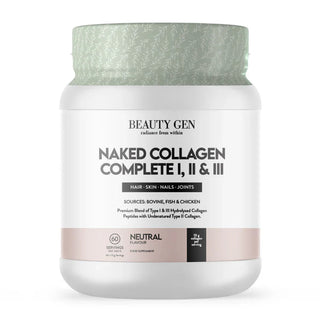
Collagen supplements are typically derived from bovine (cattle), marine (fish), porcine (pig), or chicken sources. Marine collagen is often preferred for its superior bioavailability. Most supplements come as hydrolysed collagen (collagen peptides), broken down into smaller molecules for easier digestion and absorption. You can also get collagen from bone broth, chicken skin, fish skin, and organ meats — but supplementation is the practical route to consistent, therapeutic doses.
Benefits of Collagen
1. Promotes skin health
- Hydration and Elasticity: Winter's cold, dry air strips moisture from your skin. Research in Skin Pharmacology and Physiology found that women taking collagen peptides for eight weeks showed significant improvement in skin hydration and elasticity versus placebo.
- Anti-Ageing: A 2019 meta-analysis of 11 studies involving over 800 participants found that hydrolysed collagen significantly improved skin elasticity, hydration, and dermal collagen density — reducing wrinkles and supporting a more youthful appearance.
- Wound Healing and Skin Repair: Collagen plays a critical role in all phases of wound healing, and may help mitigate some UV damage — though always alongside proper sun protection, never instead of it.
- Cellulite Reduction: Some studies suggest collagen peptides can reduce the appearance of cellulite by strengthening the dermal layer.
For comprehensive skin support, pair your collagen with vitamin C, biotin, and hyaluronic acid from our skin, hair, and nails collection.
2. Supports joint health
- Reduces Joint Pain: Cold weather worsens joint pain and stiffness. A landmark study in the International Journal of Medical Sciences found that participants taking Type II collagen for 90 days experienced significant reductions in joint pain and improvements in physical activities.
- Enhances Mobility: By maintaining cartilage integrity, collagen supports flexibility — keeping hikers, runners and cyclists doing what they love.
- Supports Active Lifestyles: Whether you're a parkrun weekend warrior or a dedicated gym-goer, athletes supplementing collagen peptides reported less joint pain during activity (Current Medical Research and Opinion).
Explore our full range of joint and mobility supplements for the right combination.
3. Strengthens hair and nails
- Guards Against Brittleness: Collagen provides the amino acids — particularly proline and glycine — that keep hair and nails strong through harsh, dry months.
- Promotes Growth: A 2017 study found women taking collagen peptides daily for 24 weeks had a 12% increase in nail growth rate and a 42% decrease in broken nails.
- Supports Hair Thickness: Collagen's amino acids are building blocks for keratin, the protein your hair is made of.
4. Boosts gut health
- Supports Intestinal Barrier Function: Collagen may help strengthen the gut lining — important for preventing "leaky gut".
- Soothes the Digestive Tract: Glycine has anti-inflammatory properties that may calm gastrointestinal irritation.
- Aids Digestion: Collagen attracts water and acidic molecules, supporting the digestive process and nutrient absorption.
For optimal gut health, combine collagen with a quality probiotic from our gut health collection.
5. Supports bone health
Bones are roughly 30% collagen — the flexible framework on which calcium is deposited. A 12-month study found post-menopausal women taking daily collagen peptides had significantly higher bone mineral density than controls, and supplementation may help slow the bone breakdown that leads to osteoporosis — a real concern for South African women after menopause.
6. Supports heart and cardiovascular health
Collagen gives structure to arteries and blood vessels. A study in the Journal of Atherosclerosis and Thrombosis found that six months of collagen tripeptides significantly reduced arterial stiffness and increased HDL ("good") cholesterol.
7. Aids muscle mass and recovery
Between 1–10% of muscle tissue is collagen. Combined with resistance training, collagen supplementation may promote muscle protein synthesis, support recovery between sessions, and help slow age-related muscle loss (sarcopenia). Pair it with our sports nutrition range if you train regularly.
8. May support weight management
Collagen is a protein, and protein promotes satiety. Some research suggests collagen peptides may be more satiating than other protein types — a quiet helper for appetite regulation.
How to Choose the Right Collagen Supplement
- Look for hydrolysed collagen (collagen peptides) — broken down for absorption.
- Match the source to the goal: marine for skin (high Type I, superior absorption); bovine for joints and bones (Types I and III); Type II or multi-type for dedicated joint support.
- Check for added nutrients: vitamin C (essential for collagen synthesis), hyaluronic acid, or biotin.
- Opt for quality: third-party tested, free from unnecessary fillers, from reputable manufacturers.
How to Take Collagen for Best Results
- Consistency is key: the studies showing benefits used daily supplementation for at least 8–12 weeks. Collagen works gradually — don't expect overnight results.
- Pair with vitamin C: without it, your body can't effectively produce or use collagen. Eat citrus, guavas and peppers, or add a supplement from our vitamins and minerals collection.
- Timing: any time of day works — morning coffee is simply the easiest habit to keep.
- Dosage: studies use 2.5–15g daily; 10g is the most common dose for general benefits.
- Mixing: collagen peptide powder is virtually tasteless and dissolves in hot or cold liquids — coffee, tea, smoothies, porridge, even soup.
Protect the Collagen You Already Have
- Eat for synthesis: vitamin C, zinc, copper and proline — citrus, berries, leafy greens, nuts, seeds, eggs and lean proteins.
- Sunscreen, every day: South Africa's intense UV is the biggest collagen destroyer there is — even on cloudy days.
- Don't smoke: smoking dramatically accelerates collagen breakdown.
- Limit sugar: excess sugar causes glycation, which stiffens and damages collagen fibres.
- Sleep 7–9 hours: growth hormone — which drives collagen production — is released during deep sleep.
- Hydrate and move: water supports synthesis; exercise stimulates it.
Who Should Consider Collagen?
- Adults over 30, as natural production declines noticeably.
- Active individuals and athletes, for joints, recovery and connective tissue.
- Those with joint pain or arthritis — collagen may reduce pain and improve mobility.
- Anyone focused on skin ageing, especially through menopause, when oestrogen decline accelerates collagen loss dramatically — up to 30% in the first five years.
- Post-menopausal women, for bone density support alongside calcium and vitamin D.
The Honest Bottom Line
Collagen genuinely earns its place — but only at a proper dose (10g daily), taken consistently for 8–12 weeks, with vitamin C on board and sunscreen on your face. Anything less and you're buying expensive coffee creamer.
Not sure whether marine or bovine is right for you, or which brand on our shelf gives the best grams-per-rand? Pop into One Life Health in Centurion, Glen Village or Edenvale, or WhatsApp us on 076 913 5059 — we'll point you to the honest answer.
By One Life Health Consultant
From the apothecary shelf
A few products we'd hand a customer asking for a starting point. Not a paid placement — these are what we actually take, recommend, or keep at the front of the shelf.