


PHARMA GERMANIA
White Willow Bark 100g
White Willow Bark 100gRegular price
R 92.11
Regular price
Sale price
R 92.11
Unit price
per
Shipping calculated at checkout.
All prices include VAT.
Secure checkout
Visa
Mastercard
Instant EFT
Card details handled by PayFast, never stored on this site.
More like this
Available now, from the same shelf. Choose only what you need.


Delivery and pickup options at checkout
Choose from the options available for your basket. For pickup, wait for your ready-to-collect notification before travelling.
Product notice & tag guide
VeganGluten FreeDairy Free
Product tags are a shopping guide only. Always check the product label, ingredients and allergen information before purchase. If you are unsure whether this product is suitable, ask a One Life Health consultant or a qualified healthcare professional. Read our tag guide.
Add R 307.89 more for free delivery
Free at R400
Pickup where available
Choose from the options available for your basket. For pickup, wait for your ready-to-collect notification before travelling.
Couldn't load pickup availability
Not sure it’s right for you? Ask before you buy.
Free WhatsApp consult — 30 years behind the counter.
Family-owned since 1996
Consultant-vetted range
SA stock – no import wait


Common questions
What is White Willow Bark known for?+
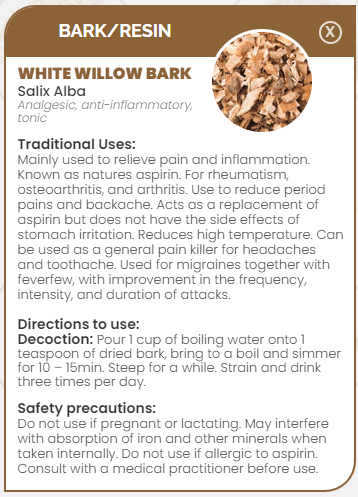
White willow bark is considered to be the natural form and original source of modern aspirin, and it has a long tradition of use for everyday aches. Pharma Germania supplies it as a dried powder.
Can I use White Willow Bark in skincare?+
Yes, the bark contains salicin, from which salicylic acid is derived, and it is used topically to help clear pores and soothe irritation on problem skin. The powder is ideal to add to facial masks, skincare products and soaps.
How do I prepare White Willow Bark as a tea?+
As a bark, it is made as a decoction: place the required quantity in 500ml of water, bring to the boil, remove from the heat and steep for 15 - 20 minutes, then strain. The usual quantity is between 1 - 2 teaspoons per cup.
Who should check before taking White Willow Bark?+
Speak to your healthcare provider if you are pregnant, nursing or on medication. Our consultants can help at any of our three stores or on WhatsApp.
Product details
Dried White Willow Bark Powder is well known for relief of rheumatism. It relieves the pain associated with headaches, backache, nerve pain, joint pain, inflammation and menstrual cramps. White willow bark is considered to be the natural form and original source of the modern aspirin.
White willow bark is also used topically in skincare as it contains salicin, from which salicylic acid is derived. White willow bark is anti inflammatory, and helps clear pores and alleviate irritation and problem skin.
The powder is ideal to add to facial masks, skincare products, soaps, etc.
MEDICINAL HERBS BY ACTIONS & TARGETS IN THE BODY
Aloe Ferox, Aniseed, Astragalus, Burdock, Catnip, Cayenne, Chickweed, Echinacea, Elder, Garlic, Lady’s Mantle, Lemongrass, Liquorice, Meadowsweet, Myrrh, Olive Leaf, Pau D’arco, Red Clover, Rosemary, Slippery Elm, Turmeric, Uva Ursi (Bearberry).
Astragalus, Birch, Burdock, Dandelion, Fennel, Garlic, Green Tea, Liquorice, Milk Thistle, Parsley, Pau D’arco, Rosemary, Turmeric.
Alfalfa, Aloe Ferox, Burdock, Cinnamon, Rosemary.
Alfalfa, Aloe Ferox, Billberry, Birch, Boldo, Buchu, Butcher’s Broom, Calendula (Marigold), Catnip, Chamomile, Devil’s Claw, Echinacea, Elder, Fenugreek, Feverfew, Flaxseed, Ginger, Juniper Berries, Lady’s Mantle, Liquorice, Meadowsweet, Mullein, Mustard Seed, Rosemary, Turmeric, White Willow Bark, Wild Yam, Witch Hazel.
Billberry, Burdock, Celery, Elder, Ginger, Ginkgo, Green Tea, Mate Tea, Milk Thistle, Olive Leaf, Rosemary, Turmeric.
Alfalfa, Dandelion, Elder, Garlic, Ginger, Liquorice, Mate Tea, Pau D’arco, Rosemary.
Alfalfa, Black Cohosh, Cayenne, Celery, Dandelion, Devil’s Claw, Feverfew, Flaxseed, Garlic, Ginger, Olive Leaf, Pau D’arco, Peppermint, Raspberry, Sarsaparilla, Scullcap, Stinging Nettle, St. John’s Wort, Wild Yam.
Astragalus, Billberry, Catnip, Celery, Chamomile, Chaste Tree, Devil’s Claw, Dong Quai, Eyebright, Fennel, Fenugreek, Feverfew, Ginger, Ginseng, Gotu Kola (Hydrocotyle), Hops, Lavender, Lemongrass, Liquorice, Marshmallow, Mate Tea, Motherwort, Oat Straw, Passionflower, Peppermint, Plantain, Rosemary, Sage, Sarsaparilla, Scullcap, Thyme, Valerian, Vervain, White Willow, Wormwood.
Aloe Ferox, Barberry, Billberry, Black Cohosh, Borage, Butcher’s Broom, Cayenne, Chickweed, Cinnamon, Devil’s Claw, Elder, Garlic, Gentian, Ginger, Ginkgo, Ginseng, Gotu Kola (Hydrocotyle), Green Tea, Hawthorn, Hops, Horse Chestnut, Hyssop, Liquorice, Motherwort, Olive Leaf, Parsley, Passionflower, Pau D’arco, Peppermint, Rosemary, Scullcap, Uva Ursi (Bearberry), Valerian.
Gastrointestinal or Digestive System
Alfalfa, Aloe Ferox, Aniseed, Billberry, Boldo, Buchu, Burdock, Catnip, Cayenne, Chamomile, Cinnamon, Cloves, Dandelion, Devils Claw, Fennel, Fenugreek, Flax, Garlic, Gentian, Ginger, Ginseng, Gotu Kola (Hydrocotyle), Green Tea, Juniper Berries, Lady’s Mantle, Lemongrass, Liquorice, Marshmallow, Mate Tea, Meadowsweet, Olive Leaf, Parsley, Peppermint, Plantain, Red Clover, Raspberry, Rosemary, Sage, Slippery Elm, Thyme, Turmeric, Uva Ursi (Bearberry), Valerian, Vervain, Wormwood.
Burdock, Cloves, Hops, Irish Moss, Lemongrass, Raspberry, Sage, Stinging Nettle, Vervain, White Willow Bark.
Astragalus, Burdock, Devil’s Claw, Echinacea, Eyebright, Elder, Garlic, Ginseng, Green Tea, Liquorice, Mate Tea, Milk Thistle, Myrrh, Red Clover, White Willow Bark.
Celery, Feverfew, Ginger, Hawthorn, Horse Chestnut, Lady’s Mantle, Liquorice, Meadowsweet, Scullcap, Uva Ursi (Bearberry), Valerian, Wild Yam.
- Menopause: Chaste Tree, Dandelion, Devils Claw, Liquorice, Motherwort, Sage, Wild Yam.
- Menstruation: Black Cohosh, Calendula (Marigold), Chamomile, Chaste Tree, Indian Cornbeard, Dong Quai, Feverfew, Liquorice, Motherwort, Raspberry, Rosemary, Sarsaparilla, Valerian, Wild Yam.
- Prostate: Buchu, Hydrangea, Juniper Berries, Liquorice, Milk Thistle, Parsley, Pumpkin seeds, Saw Palmetto, Uva Ursi (Bearberry)
- Sexual Function/Hormones: Alfalfa, Chaste Tree, Dong Quai, Gotu Kola (Hydrocotyle), Sarsaparilla, Saw Palmetto.
Aniseed, Astragalus, Catnip, Cayenne, Chickweed, Elder, Fennel, Fenugreek, Feverfew, Garlic, Ginkgo, Ginseng, Green Tea, Irish Moss, Juniper Berries, Liquorice.
Tea made from botanic material (leaves, seeds, flowers etc.) is called, herbal tea.
A herbal tea can be made from fresh or dried botanic material – be that leaves, flowers, seeds, or roots and is made by pouring boiling water over the material and letting it steep for a few minutes. This is called an infusion.
The seeds and roots normally require the mixture to be boiled to release the ingredients. The tea “infusion or tisane” is then strained, sweetened with honey if so desired, and served.
The material can be mashed to extract the compounds and oils. Quantities of the herb required to make a cup of tea is usually between 1 – 2 teaspoons. Please look at the information leaflets inside every box for more specific information.
Take the required quantity of herbs and place in one cup of boiled water. Steep for 10 - 15 minutes. Strain and drink hot or cold.
Take the required quantity of herbs and place in 500ml of water. Bring to the boil on the stove and remove from heat. Let it steep for 15 - 20 minutes. Strain and drink hot or cold.
If a mixture of two or more herbs have been made. Use a teaspoon of the mixture when making your tea.
Be the first to review this one
Nobody has written about this product yet. If you have taken it, tell the next person what it was actually like — we would rather have the honest version than the flattering one.
Every honest review, good or bad, earns you R25 off your next order over R250 with the code we send you.
Not taken it yet? Ask a consultant on WhatsApp before you buy — that is what the counter is for.
Trusted Health, Delivered
25+ years of expert advice · 250+ trusted brands · Free delivery over R400 · Pickup where available