


The Apothecary
Stress & Mood: When Your Adaptogens Actually Work
Wired-but-tired, foggy in the afternoons, snapping at the kids? Here's what we'd actually take, what we'd skip, and when the problem isn't a supplement problem.
Stress is a system, not a feeling. The supplements that help are studied for supporting a healthy stress response over weeks, rather than sedating you in the moment. Here's what works, what's marketing, and where the line is between a hard month and something that needs a clinician.
Not sure which one?
Get a quick product pick
Your match
Need a hand?
Find the right supplement faster
Browse the relevant range or ask our team for a quick recommendation.
Who this is for
If you're carrying a sustained level of stress that wasn't there a year ago; if you've noticed you're more snappy, less patient, less rested; if your sleep has slipped, your appetite is off, and you can't quite identify why — adaptogens and the supporting cast can help. If you're experiencing persistent low mood, thoughts of self-harm, or your functioning is severely affected, please skip this guide and talk to a GP or the South African Depression and Anxiety Group (SADAG) on 0800 567 567. Supplements are not the right tool for clinical depression.
The short version
- Ashwagandha (KSM-66 or Sensoril, 300–600 mg/day) — the most evidence-backed adaptogen for cortisol and chronic stress.
- Rhodiola rosea (Rosavin 3% standardised, 200–400 mg morning) — for fatigue, brain fog, and mild burnout. Energising, not sedating.
- Magnesium glycinate 300–400 mg evening — the foundation. Most stressed people are magnesium-depleted.
- L-theanine 200 mg as needed — alert calm, no sedation.
- 5-HTP 50–100 mg evening — for low-mood-with-poor-sleep.
- B-complex daily — stress burns through B vitamins.
What stress actually does
The HPA axis (hypothalamus-pituitary-adrenal) is a feedback loop that produces cortisol. In a healthy person, cortisol peaks 30 minutes after waking and drops through the day, lowest at midnight. Chronic stress flattens that curve — cortisol stays elevated through the evening, drops less overnight, and the morning peak weakens. You sleep badly, wake unrested, can't get going without caffeine, and crash by 3 p.m. The aim of adaptogens is to restore the curve.
Ashwagandha — the foundation
Withania somnifera is the most studied adaptogen on the planet. Multiple randomised trials have studied it for supporting a healthy stress response over about 8 weeks at 300–600 mg of standardised extract. KSM-66 (the most studied form) is taken in the morning or with dinner. Sensoril is more sedating — better for evening. Results show up at the 3–4 week mark, not the next morning.
Caveats: don't take ashwagandha if you have hyperthyroidism (it boosts thyroid hormones), are on thyroid medication, are pregnant, or are on immunosuppressants. People with autoimmune conditions should check with their specialist.
What many customers choose: KSM-66 at 600 mg with dinner, giving it a full month before judging the effect.
Rhodiola — when you're tired AND stressed
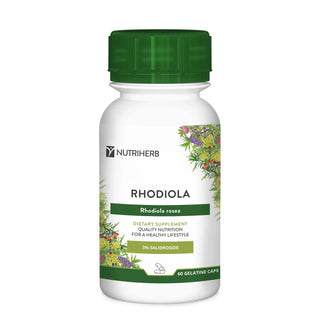
Rhodiola rosea is the adaptogen for the person who's stressed but also flat-out exhausted. Where ashwagandha is studied for supporting a calmer stress response, rhodiola is used to support energy and focus. The standardised extract (3% rosavins, 1% salidroside) at 200–400 mg taken in the morning is the typical dose. Don't take it after 2 p.m. — it'll interfere with sleep.
Rhodiola is particularly useful for what's loosely called 'high-functioning burnout' — the person who keeps showing up but is running on empty.
What we keep on the shelf: a 3% rosavins / 1% salidroside extract — these ratios are non-negotiable. Take it before 2pm or it eats your sleep.
Magnesium — again
Stress depletes magnesium. Low magnesium worsens stress. It's a loop. If you're going to take only one thing on this list, magnesium glycinate at 300–400 mg in the evening would be it. Calmer baseline, better sleep, less reactive. See the sleep guide for the form discussion.
What many customers choose: magnesium bisglycinate in the evening, taken consistently through a stressful stretch.
L-theanine — the alert calm
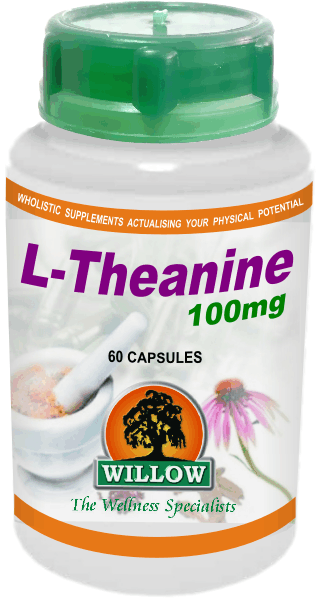
L-theanine is the calming amino acid in green tea. It produces a state psychologists call 'alert calm' — focus without anxiety. 200 mg taken as needed (before a presentation, a stressful meeting, or as part of a daily routine) takes the edge off without sedating. Pairs well with caffeine — actually smooths the coffee crash.
What we'd suggest: 200 mg L-theanine before a high-pressure meeting works better than another coffee. Stacks well with low-dose caffeine for clean focus without the jitter.
5-HTP — for the mood-and-sleep crowd
5-HTP is a precursor to serotonin and melatonin. If your low mood comes with poor sleep, 50–100 mg in the evening can be helpful. Important: do not combine with SSRI/SNRI antidepressants without medical guidance — there's a serotonin syndrome risk that's rare but serious.
B-complex — the unglamorous workhorse
Stress burns through B vitamins, particularly B5 (pantothenic acid, used by the adrenals) and B6 (used in neurotransmitter synthesis). A good B-complex daily covers this — methylated forms (methylfolate, methylcobalamin) are better for the roughly 30% of the population with MTHFR variants.
What's overhyped
- Reishi for stress — fine adaptogen, weaker evidence than ashwagandha.
- CBD for anxiety — variable evidence, often under-dosed in retail.
- Holy basil tea — pleasant, but you'd need litres for an adaptogenic dose.
- Stress 'gummies' with 10 ingredients — usually too little of each to matter.
When this isn't a supplement problem
Persistent low mood lasting more than two weeks; thoughts of self-harm; panic attacks; inability to function at work or home; sleep that's fragmented for over a month; appetite change with weight loss — these are not supplement problems. SADAG: 0800 567 567. Lifeline: 0861 322 322. Talking to a GP or psychologist is not weakness; it's competent self-care.
Shop this at One Life Health
-
 BIOMAX® - Bio-Shoden® Ashwagandha - 60 Capsules — A standardised ashwagandha extract studied for supporting the body through sustained stress — give it a full month.
 -
 WILLOW - Magnesium Glycinate - 120 Capsules — A gentle, well-absorbed magnesium for the evening — the foundation most stressed people are running short on.
 -
 GENOLOGIX - L-Theanine 300mg BULK - 180 Veg Capsules — The green-tea amino acid for an alert, settled kind of calm without sedation.
 -
 SWANSON - Adaptogenic Herbal Complex with Rhodiola, Ashwagandha & Ginseng - 60 Capsules — A morning adaptogen blend for when you are stressed but also flat-out tired — take it before 2pm.
 -
 NATROCEUTICS® SA - Magnesium Complex - 60 Capsules — A multi-form magnesium option to help maintain a calmer baseline and support normal nervous system function.
Our top picks for this guide
A few products we'd hand a customer asking for a starting point. Not a paid placement — these are what we actually take, recommend, or keep at the front of the shelf.