


The Apothecary
Gut Health & Digestion: A Practical Apothecary Guide
Bloating, reflux, irregular trips to the bathroom, or just a gut that's never quite settled? Here's what 30 years on the shop floor has taught us about what actually helps — and where probiotics are oversold.
If half the wellness internet is telling you that the gut is the second brain, the other half is selling probiotics. Most of both are wrong. The gut is genuinely important and most probiotics genuinely do very little. Here's how to actually fix the gut, in the order we'd talk you through it in store.
Not sure which one?
Get a quick probiotic pick
Your match
Who this is for
If you bloat after meals; if your bowel habits have changed; if you've taken antibiotics in the last six months; if you've been told you have IBS; if your skin is unsettled and you suspect the gut is involved — this is for you. Crohn's, ulcerative colitis, coeliac disease, and red-flag symptoms (see end of article) need a GP, not a supplement aisle.
The short version
- Fibre, not probiotics, is the foundation. Most South Africans eat 12–18 g/day. The target is 28–35 g. Fixing this alone solves 60% of gut problems.
- Probiotics work best when matched to the problem: Saccharomyces boulardii for post-antibiotic; Bifidobacterium infantis 35624 for IBS-D; Lactobacillus plantarum 299v for IBS bloating.
- Digestive enzymes help if you're over 50, on PPIs, or notice undigested food.
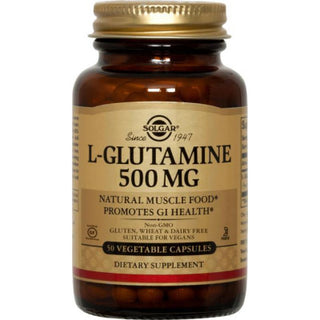
- L-glutamine at 5 g supports the gut lining, particularly after antibiotics or alcohol-heavy stretches.
- Apple cider vinegar helps low stomach acid (reflux often is, not the other way round).
Start with fibre, not pills
The gut microbiome is essentially a fibre-fermentation factory. Without fibre — particularly the soluble fibre in oats, legumes, vegetables, and seeds — even the best probiotics have nothing to eat. They pass through and exit. This is why most people see no benefit from probiotics: they've changed the staff but left the warehouse empty.
If your fibre intake is currently low, ramp up gradually. Going from 15 g to 35 g overnight will cause a week of bloating that will convince you fibre is the enemy. Add 5 g per week, drink more water, and you'll be at target inside a month.
What we do ourselves: two heaped tablespoons of ground flaxseed in the morning yoghurt, a handful of berries, a piece of fruit. That alone moves most bloated-and-irregular customers further than any pill.
Probiotics — the strain matters more than the brand
You can spend R200 or R600 on a probiotic, but if the strain isn't matched to your problem, both prices are wasted. Here are the strains with real clinical evidence for specific conditions:
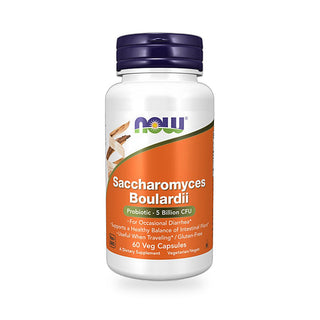
What we keep on the shelf: Lactobacillus rhamnosus GG and Saccharomyces boulardii are our two go-tos. GG for daily balance, boulardii for antibiotic recovery or travel.
- Saccharomyces boulardii — antibiotic-associated diarrhoea, traveller's diarrhoea, post-antibiotic recovery. The one to take when your GP gives you a course of antibiotics.
- Bifidobacterium longum 35624 (Bifantis) — IBS, particularly the diarrhoea-predominant variety.
- Lactobacillus plantarum 299v — bloating, IBS flatulence, post-meal discomfort.
- Lactobacillus rhamnosus GG — paediatric gastro, broad immune support.
- Multi-strain blends with at least 20 billion CFU — for general restoration after antibiotics or a difficult period.
Browse our gut health collection and look at the strain names on the back, not the brand on the front. If you're not sure, ask in-store — we'll match the strain to your symptom.
Digestive enzymes — for the over-50s and the PPI crowd
Stomach acid drops with age and with long-term use of proton pump inhibitors (Nexiam, Pantoloc, Omezol). Low stomach acid causes a paradoxical reflux because food sits and ferments rather than moving through. If you're over 50, or have been on PPIs for years, or notice undigested food in stools, digestive enzymes (a broad-spectrum pancreatin + bromelain blend taken with meals) can quietly transform digestion within two weeks.
What we'd suggest: a broad-spectrum enzyme with the largest meal of the day. If you're on long-term PPIs, betaine HCl is often the missing piece — but discuss with your GP first.
L-glutamine — the gut lining
The cells lining the small intestine turn over every 3–5 days and run on glutamine. After antibiotics, NSAIDs, or chronic stress, the lining can become more permeable ("leaky gut" in casual language, "increased intestinal permeability" in the clinical literature). 5 g of L-glutamine in water in the morning, for 4–6 weeks, gives the lining the raw material to rebuild. It's not a daily forever supplement — it's a recovery tool.
Apple cider vinegar and the reflux paradox
If you've been told you have acid reflux and put on a PPI, here's an uncomfortable truth: a meaningful portion of reflux is caused by low stomach acid, not high. The lower oesophageal sphincter closes when the stomach detects sufficient acid. If acid is too low, the sphincter doesn't close, and what acid there is leaks up. Treating with a PPI temporarily relieves symptoms but worsens the underlying problem.
Test (carefully, with your GP's input): 1 tsp of apple cider vinegar in water before a meal. If symptoms improve, you have a stomach-acid problem masquerading as reflux. If symptoms worsen, you have classic reflux and PPIs are correct.
What's overhyped
- Generic probiotic blends sold without strain names — usually under-dosed and unmatched to your problem.
- Bone broth as a gut cure — it's fine food, not a cure. The collagen survives boiling but the gut-healing claims outpace the evidence.
- Charcoal pills — they bind nutrients and medications indiscriminately. Useful in acute food poisoning, not as a daily supplement.
- Detox teas — laxatives in marketing dress. Skip.
When this isn't a supplement problem
The following are not gut-supplement problems: blood in stools, persistent diarrhoea longer than two weeks, unexplained weight loss, severe abdominal pain, vomiting that persists, fever with gut symptoms, family history of colon cancer with new symptoms over 45. Please book a GP appointment first. Our staff will say the same in person.
Our top picks for this guide
A few products we'd hand a customer asking for a starting point. Not a paid placement — these are what we actually take, recommend, or keep at the front of the shelf.