

The Apothecary
The GLP-1 Side Effect Nobody Warns You About - Losing Muscle
On a GLP-1 the scale moves, but it cannot tell you what you lost. Losing weight quickly can cost lean muscle as well as fat — protein isn't a nice-to-have here, it's the whole game.
Weight can come off fast on a GLP-1, and for most people the bathroom scale is the only instrument measuring it. A scale cannot tell you what you lost. Losing weight quickly can cost lean muscle as well as fat if protein intake and resistance training aren't protected — and a body-composition scan is usually the first thing that says so out loud. Almost nobody is told this before they start. So let this be the telling.
Not sure which one?
Get a quick product pick
Your match
Need a hand?
Find the right supplement faster
Browse the relevant range or ask our team for a quick recommendation.
Why GLP-1 medications eat muscle along with fat
GLP-1 medications work mainly by switching your appetite off. That's the point - and it works remarkably well. But your body doesn't fuss about what it burns when food is scarce. Eat 800-1,200 calories a day with little protein and no resistance training, and your body will happily strip amino acids out of your thighs and shoulders to keep the lights on. Studies of rapid weight loss consistently show that without deliberate counter-measures, a quarter to a third of the loss can be lean mass.
Muscle is not just for gym photos. It's where you store the strength that gets you off the toilet at eighty, the metabolic engine that burns kilojoules at rest, and your insurance policy against the rebound - because when muscle goes, your resting metabolism drops with it.
What we'd actually suggest
First, protein - food before powder. Eggs, chicken, fish, beans, amasi. On a GLP-1 your stomach empties slowly and three bites can feel like a feast, so aim for protein first at every meal, before you fill up on anything else.
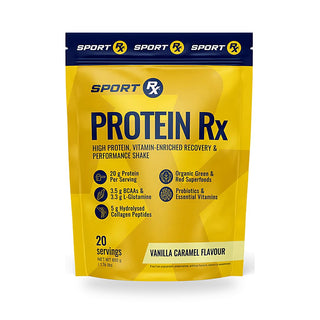
Second, a protein shake on the days food won't go in. This is where a powder earns its place - not as a replacement for eating, but as a rescue on the days your appetite is simply gone. One scoop of Protein Rx in water or milk is roughly 25g of protein you'd otherwise have skipped. Sip it slowly; a GLP-1 stomach doesn't like being rushed.
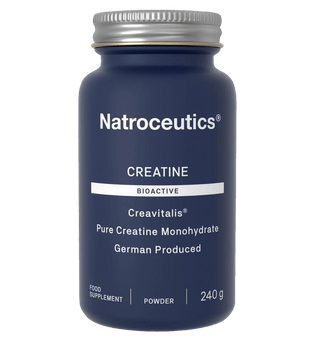
Third, creatine - 3 to 5 grams, every single day. Creatine monohydrate is the most-studied sports supplement on earth, and the research on preserving strength and lean mass during energy restriction is genuinely solid. It's tasteless in juice or yoghurt. It is not a steroid, it will not make you bulky, and the water it draws into muscle is a feature, not a fault. Clear it with your prescriber first, then be boring and consistent about it.
Fourth - and I can't sell you this one - lift something twice a week. Muscle responds to being needed. Bodyweight squats in your lounge count. Without the training signal, protein and creatine are seeds on concrete.
Getting there on a South African plate
The 1.2-1.6g/kg target sounds abstract until you put rand-and-cents food on it. Three eggs at breakfast is about 18g. A tin of pilchards - 30g for under R30, still one of the cheapest proteins in the country. A cup of amasi, 8g. A palm of chicken at supper, 30g. A biltong snack, 15g for a handful. Stack a day like that and you're at 100g before any powder enters the picture - the shake is for the days nausea wins, not a daily ritual.
Timing matters less than people think, with one exception: on a GLP-1, don't save protein for supper. By evening your appetite window may have closed entirely. Front-load it - protein at breakfast while the day's small appetite is freshest, and spread the rest across whatever meals actually happen. And weigh yourself weekly, not daily: what you're watching for is the rate of loss. Faster than about 1% of body weight per week is the zone where muscle loss accelerates - worth a conversation with your prescriber about pace.
When NOT to bother
If you're on a GLP-1 under proper medical supervision, eating 100g+ of protein daily from food, and strength training three times a week - you are already doing the work, and a shake would just be an expensive milkshake. And if anyone tells you a supplement can replace your medication or "do the same thing naturally" - walk away. Nothing on our shelves is a GLP-1, and we'll never pretend otherwise.
One more thing: never adjust or stop your medication based on a blog - that conversation belongs with your prescribing doctor, always.
If you're on this journey and want a second opinion on your stack, the full GLP-1 Companion protocol is consultant-signed and built exactly for this - and STACK10 takes 10% off when three or more items share the basket. Or just WhatsApp me your current routine and I'll tell you honestly what's missing and what's wasted money.
— the One Life Health consultants
How the picks compare
| Product | Price | Best for |
|---|---|---|
 SPORT RX Protein Rx Vanilla Caramel, 800g SPORT RX Protein Rx Vanilla Caramel, 800g
|
R501.82 | THE NON-NEGOTIABLE — A shake on the days a full meal feels impossible - because on a GLP-1, most days do. |
 NATROCEUTICS Creatine Monohydrate Bioactive, 240g NATROCEUTICS Creatine Monohydrate Bioactive, 240g
|
R399 | MUSCLE INSURANCE — Creavitalis® creatine - the most-studied supplement for holding onto strength while eating less. |
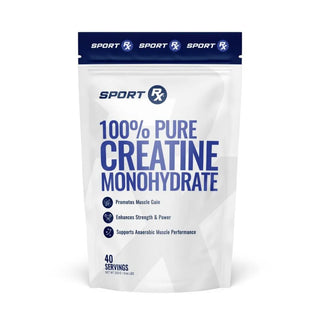
 SPORT RX 100% Pure Creatine Monohydrate, 200g SPORT RX 100% Pure Creatine Monohydrate, 200g
|
R215 | BUDGET PICK — Same molecule, simpler label. 3-5g a day, every day, stirred into anything. |
Frequently asked questions
How much protein do I actually need on a GLP-1?
The research on people losing weight quickly points to roughly 1.2-1.6g per kilogram of body weight per day - noticeably more than the average South African diet delivers. If you weigh 80kg, that's 96-128g of protein daily. When your appetite is switched off, you will not get there by accident; you get there by planning.
Is creatine safe to take alongside my medication?
Creatine is one of the most-studied supplements in existence and is generally well tolerated in healthy adults, but 'generally' is not 'you specifically' - clear it with your prescribing doctor, especially if you have kidney concerns. Then take it daily, not just on gym days.
Can't I just eat more protein when I'm off the medication?
Muscle lost during rapid weight loss doesn't automatically return when you eat normally again - that's partly why rebound weight is often fattier than what was lost. Protecting muscle while you lose is far easier than rebuilding it after.
References
- Examine.com - Creatine
- NIH Office of Dietary Supplements - Dietary supplements for weight management
- Examine.com - Protein intake guide
Our top picks for this guide
A few products we'd hand a customer asking for a starting point. Not a paid placement — these are what we actually take, recommend, or keep at the front of the shelf.