


The Apothecary
Collagen Supplements in South Africa: Marine vs Bovine vs Vegan (2026 Buyer's Guide)
Marine, bovine, or vegan collagen — which is right? What dose actually works, and how to spot the brands worth your money.
Collagen is one of the few supplements that genuinely earns its place at 10–15 g a day. But the shelf is full of under-dosed sachets and flavoured collagen drinks where the active ingredient is barely 3 g. Here's what 30 years on the shop floor has taught us about choosing collagen — bovine, marine, or vegan — at the doses that actually work.
Not sure which one?
Get a quick product pick
Your match
Need a hand?
Find the right supplement faster
Browse the relevant range or ask our team for a quick recommendation.
What Is Collagen and Why Does Your Body Need It?
Collagen is the most abundant protein in the human body. It forms the structural framework of your skin, tendons, ligaments, cartilage, bones, and the lining of your gut. Think of it as the scaffolding that holds everything together.
Your body produces collagen on its own, but production starts declining from your mid-twenties. By your forties, output has dropped significantly. The visible signs are familiar: skin that loses its bounce, fine lines that settle in around the eyes and mouth, joints that feel less fluid, hair that thins. These are not just cosmetic concerns. They reflect real structural changes happening in connective tissue throughout the body.
Collagen performs four major roles worth understanding:
Skin: Type I and III collagen make up the dermis. They determine skin elasticity, firmness, and hydration. When collagen degrades, the skin loses the bounce-back quality that characterises younger skin. Supplementation studies have shown measurable improvements in skin elasticity and hydration at doses of 10 grams per day taken consistently over 8 to 12 weeks.
Joints: Type II collagen is concentrated in cartilage. It acts as a cushion between bones and helps joints move without friction. Joint collagen loss is associated with the aches and stiffness that become more common with age or heavy physical activity.
Gut lining: Collagen, particularly from bovine sources rich in the amino acids glycine and proline, supports the integrity of the intestinal wall. This is relevant for people managing gut permeability issues.
Hair and nails: Collagen provides structural support for hair follicles and nail beds. While the evidence here is less robust than for skin, regular collagen supplementation is associated with improvements in nail brittleness and hair thickness in several clinical studies.
Marine vs Bovine vs Vegan: An Honest Comparison
Not all collagen supplements are the same, and the source matters more than most marketing material will admit. Here is a clear-eyed breakdown of the three main types available in South Africa.
Marine Collagen
Marine collagen is extracted primarily from fish skin and scales. It is exceptionally rich in Type I collagen, which is the main type found in human skin. The molecular structure of marine collagen peptides is smaller than that of bovine collagen, which means they are absorbed into the bloodstream more efficiently. Some research suggests marine collagen has a bioavailability up to 1.5 times higher than bovine sources, though both perform well when properly hydrolysed.
Pros: - High in Type I collagen, directly relevant to skin health - Smaller peptide size, potentially faster absorption - Good option for people avoiding red meat or beef products - Sustainable when sourced from wild-caught fish or certified aquaculture
Cons: - Not suitable for those with fish allergies - Not halaal if sourced from non-halaal certified facilities (check the label) - Generally more expensive per gram than bovine collagen - Does not provide Type II collagen, relevant for joint support
Marine collagen is the right choice if your primary concern is skin, hair, and nails, and you are happy to pay a small premium for it.
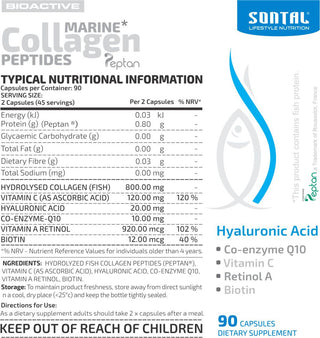
At One Life Health, Beauty Gen's Naked Collagen Aquatic (R575) is a strong option here. It provides 10 grams of marine collagen per serving, sourced from tropical freshwater fish, with a neutral flavour that dissolves cleanly in water, coffee, or smoothies. For capsule options, try Sontal Marine Collagen 90 Capsules (R405) or Sfera Bio Nutrition Marine Collagen 120 Capsules (R504).

Bovine Collagen
Bovine collagen is derived from the hides, tendons, and bones of cattle. It is the most widely available form of collagen on the South African market and typically the most affordable per gram of protein. High-quality bovine collagen contains Types I and III collagen, making it a good all-rounder for skin, gut, and connective tissue.
Pros: - Excellent Type I and III collagen profile - Most cost-effective per gram - Widely available and well-researched - Rich in glycine and proline, supporting gut health - Works well for joints when combined with Type II sources
Cons: - Not suitable for vegetarians or people avoiding beef - Larger peptide size than marine collagen (offset by proper hydrolysis) - Quality varies significantly between brands; grass-fed sourcing matters
Beauty Gen Naked Collagen (R389) is one of the best bovine products available in South Africa. It combines undenatured collagen with hydrolysed collagen peptides, covering all three collagen types in a single product. This makes it unusually versatile: you get the skin and connective tissue benefits of Types I and III alongside the joint-specific benefits of Type II. Other solid bovine options include Virtue Collagen 300g (R455), The Harvest Table Pure Collagen Granules 350g (R668), and Bare Collagen 200g (R375) for a budget-friendly entry point.

Beauty Gen Naked Collagen + Plus is another bovine option worth noting, sourced from grass-fed cattle and carrying one of the most neutral flavour profiles in the category. If taste has been a barrier for you with other collagen powders, this one is worth trying.
Vegan Collagen
This is where the category gets a little complicated, because true vegan collagen does not exist yet at commercial scale. Your body cannot source collagen from plants the way it can from animal connective tissue.
What the supplement industry calls "vegan collagen" is actually one of two things:
-
Collagen-boosting supplements: These provide the raw materials your body uses to make collagen: Vitamin C, zinc, copper, amino acids like glycine and proline, and sometimes silica. They support collagen synthesis rather than delivering collagen directly.
-
Biosynthetic collagen: Researchers have developed collagen produced through genetically modified yeast and bacteria. This is promising technology, but it is not yet widely available in South Africa in supplement form at competitive prices.
Pros of vegan collagen boosters: - Suitable for vegetarians, vegans, and those with religious dietary restrictions - Vitamin C in particular has strong evidence for stimulating collagen production - Often contain additional antioxidants that protect existing collagen from breakdown
Cons: - Indirect mechanism; you are supporting the body's own production, not supplementing collagen directly - Results are less predictable and generally slower to appear - Does not contain collagen peptides with the specific bioactive properties studied in clinical trials
If you follow a plant-based diet, a high-quality vegan collagen booster paired with a diet rich in proline sources (legumes, pumpkin seeds, sunflower seeds) is a reasonable strategy. For everyone else, bovine or marine collagen will give you more direct and measurable results.
One Life stocks a range of collagen-supporting supplements in the beauty supplements collection. For a collagen + hyaluronic acid combo, try Bare Hyaluronic Acid + Collagen 220g (R537). For a high-protein collagen option, Primeself Keto Collagen 300g (R418) pairs well with keto or low-carb diets. And for a premium all-in-one formula, Your Wellbeing Collagen Plus 314g (R863) packs multiple supporting nutrients alongside the collagen peptides.

What we take ourselves: bovine hydrolysate (Peptan or equivalent) at 10–15 g daily, stirred into morning coffee. It dissolves clear, doesn't change the taste, and the habit sticks because it's wrapped into something we already do.
What the Science Actually Says
There is a lot of enthusiasm around collagen, and some of it outruns the evidence. Here is what clinical research has actually established.
For skin: The evidence is genuinely good. Multiple randomised controlled trials and a 2024 meta-analysis published in peer-reviewed dermatology journals confirm that oral collagen peptide supplementation improves skin elasticity, hydration, and reduces the visible depth of fine lines. A 2024 clinical trial published in Dermatology Research and Practice found significant improvements in skin collagen density, hydration, and elasticity after 12 weeks of daily hydrolysed collagen supplementation. Effect sizes are meaningful, not marginal.
For joints: A 2021 systematic review published in PubMed Central found that collagen peptide supplementation, particularly when combined with exercise, supports joint comfort and mobility — which may be a useful addition for people managing degenerative bone and joint conditions alongside their doctor's care. The mechanism is well-understood: collagen peptides accumulate in cartilage tissue and stimulate chondrocytes, the cells responsible for producing new cartilage.
For gut health: Research is promising but less conclusive than for skin. Glycine, which is abundant in collagen, has anti-inflammatory properties and supports intestinal barrier function. Most gut-specific benefits come from bovine collagen.
For hair and nails: The evidence here is improving. A 2024 clinical trial showed measurable improvements in scalp condition and hair quality after 12 weeks of hydrolysed collagen supplementation. Nail brittleness studies show similar positive trends.
The honest summary: collagen supplementation has strong, replicated evidence for skin and joints. The research on gut and hair is promising but still building. None of this is hype if you are using a properly hydrolysed product at an effective dose.
Hydrolysed vs Unhydrolysed Collagen: Why Bioavailability Matters
This is probably the most important technical distinction in the entire category, and most labels gloss over it.
Collagen is a large protein molecule. In its natural, unhydrolysed state, it is too large to be absorbed intact through the gut wall. Your digestive system breaks it down, but not always efficiently or into the specific bioactive peptide fragments that drive the skin and joint benefits seen in clinical trials.
Hydrolysed collagen (also called collagen peptides or collagen hydrolysate) has been pre-processed using enzymes to break the protein into short-chain peptides. These smaller fragments are:
- Absorbed significantly more efficiently through the gut lining
- Detectable in the bloodstream within hours of ingestion
- Shown to accumulate in skin and cartilage tissue in human studies
- The specific form used in virtually all the clinical trials showing measurable benefits
Undenatured collagen, such as undenatured Type II collagen (UC-II), works through a different mechanism. Instead of providing building blocks, it works through a process called oral tolerance, training the immune system to stop attacking joint cartilage. It is used at much lower doses (around 40mg rather than 10g) and is of particular interest for joint comfort, including for people managing autoimmune-related joint concerns under a doctor's care. Some premium products, including Beauty Gen Naked Collagen Complete, combine both hydrolysed peptides and undenatured collagen to cover both mechanisms.
The practical takeaway: if a product does not say "hydrolysed" or "collagen peptides" on the label, it may not be delivering the bioactive form that clinical studies rely on. Hydrolysed collagen is now widely available in South Africa, and there is no reason to settle for an unprocessed form.
What Dose Do You Actually Need?
Dosage is where a lot of people underserve themselves. Taking 2 to 3 grams per day because you added a teaspoon to your coffee may feel like you are doing something, but the clinical literature consistently points to higher doses for measurable results.
For skin health: 10 to 15 grams per day is the sweet spot supported by the majority of clinical trials. Most studies showing meaningful improvements in skin elasticity and hydration use a minimum of 10 grams daily over 8 to 12 weeks. Beauty Gen products are formulated around the 10g serving mark, aligning with this evidence base.
For joint support: The effective range is higher, with studies using 15 to 20 grams per day for joint-specific benefits. If joint health is your primary goal, dose accordingly and look for products that include Type II collagen or undenatured collagen.
For general connective tissue and gut support: 10 grams per day is a reasonable maintenance dose.
Consistency matters more than precision here. Ten grams every day for three months will outperform twenty grams taken sporadically. Set up a routine and stick to it for at least 8 weeks before evaluating results.
What we keep on the shelf: single-protein collagen powders. The '12-in-1 collagen complex' products are usually 2 g of collagen and 10 ingredients we can't measure. Buy plain collagen and the supporting nutrients separately if you want them.
When to Take Collagen
The timing question generates a surprising amount of debate online. The practical reality is more straightforward than the debate suggests.
Does taking it on an empty stomach matter? Some practitioners recommend morning, fasted, on the basis that digestive enzymes and stomach acid will process the peptides more efficiently without competing food present. There is logic to this, but the evidence for timing making a material difference is weak. Collagen peptides are already partially pre-digested through hydrolysis.
The evidence-based position: Take it when you will take it consistently. If you are more likely to remember it in your morning coffee, take it then. If you prefer adding it to your post-workout smoothie, that works too. The window that does have some support is pre-sleep: glycine, abundant in collagen, promotes relaxation and may improve sleep quality, which is when much of the body's repair and collagen synthesis takes place. Taking collagen before bed is a legitimate strategy, not pseudoscience.
With Vitamin C: This one actually matters. Vitamin C is a required cofactor for collagen synthesis. Taking your collagen alongside a Vitamin C source, whether from your supplement, a glass of orange juice, or a Vitamin C supplement, supports the body's use of the peptides you are delivering. Many collagen formulas include Vitamin C for this reason.
Collagen Products at One Life Health: What to Buy
One Life Health stocks a curated selection of collagen products across the collagen collection. Here is how to navigate it:
Beauty Gen Naked Collagen Complete I, II and III (600g)
The comprehensive choice. This product combines hydrolysed collagen peptides with undenatured Type II collagen, covering skin, joints, gut, and connective tissue in one formula. At 600g it offers one of the better value propositions per gram in the premium collagen category. The neutral taste means it disappears into coffee, oats, or any liquid without changing the flavour.
Best for: People who want an all-in-one product covering multiple collagen types, or anyone with both skin and joint concerns.
Beauty Gen Naked Collagen Aquatic (300g)
The marine option. Sourced from tropical freshwater fish, this delivers 10 grams of marine collagen per serving with high dissolvability and minimal taste. The smaller peptide size of marine collagen makes this a strong choice for skin-focused goals.
Best for: Skin, hair, and nail focus. People who prefer fish-sourced collagen or those avoiding beef products.
Beauty Gen Naked Collagen + Plus (338g)
Grass-fed bovine collagen peptides with an exceptionally clean flavour profile. This is the right choice if you want straightforward, high-quality bovine collagen without additions. The grass-fed sourcing indicates a higher omega-3 to omega-6 ratio in the source animal, which many practitioners consider a quality marker.
Best for: People who want clean bovine collagen without a complex formula.
Solgar Collagen
Solgar's collagen range brings the brand's well-known quality standards to the category. Solgar products are formulated with care around bioavailability, and the collagen offerings are no exception. Check the current stock in the collagen collection for available Solgar options.
For beauty-supporting supplements including Vitamin C formulas and collagen boosters, the beauty supplements collection is worth browsing alongside the collagen range.
What to Expect to Pay in South Africa
Collagen pricing in South Africa in 2026 spans a wide range, and price does not always track quality. Here is a rough guide to what the market looks like.
Budget tier (R200 to R350): Entry-level collagen products, often found in pharmacies and supermarkets. These typically deliver 5 to 10 grams per serving but sourcing, hydrolysis quality, and manufacturing standards vary considerably. Check whether the product specifies "hydrolysed" and whether it carries a third-party quality certification.
Mid-range (R350 to R600): This is where most of the reputable specialist brands sit, including the Beauty Gen range at Onelife. You are getting properly hydrolysed collagen peptides, transparent sourcing, and formulations aligned with clinical dosing. This is the value sweet spot for most buyers.
Premium (R600 to R1,000+): Higher-end products from brands like Sally-Ann Creed or specialised medical-grade formulations. The incremental benefit over well-formulated mid-range options is debatable for most users, but some people prefer the added assurance of premium sourcing and certification.
Per-gram comparison tip: Look at the price per 10g serving rather than the headline price. A 600g container at R550 works out to approximately R9 per 10g serving. A 300g container at R400 costs closer to R13 per serving. Do the maths before you assume the smaller pack is better value.
One Life Health offers free delivery on orders over R400, which means buying a monthly supply at once often brings the effective cost per serving down compared to buying smaller quantities from a local health store.
Common Questions, Answered
Does collagen powder work or is it just expensive protein? It depends on what you mean by "work". As a protein source, collagen is incomplete because it lacks tryptophan. But the clinical evidence for hydrolysed collagen peptides specifically improving skin elasticity, hydration, and joint markers is substantial and distinct from general protein supplementation. The bioactive peptides from hydrolysed collagen have measurable effects in tissue that whey protein, for example, does not replicate.
Can you take too much collagen? Collagen is generally very well tolerated. At high doses (above 30g per day), some people experience digestive discomfort. For most people at 10 to 15 grams per day, there are no reported adverse effects. People with fish or beef allergies should obviously choose their source type accordingly.
How long before you see results? Most clinical studies use 8 to 12 week protocols before measuring outcomes. Skin improvements in elasticity and hydration are typically measurable at 8 weeks. Joint benefits can take 12 weeks or longer. Do not expect results in 2 to 3 weeks at any dose.
Is collagen safe to take during pregnancy or breastfeeding? Collagen is a food-derived protein, and food-source collagen is generally considered safe. If you are pregnant or breastfeeding, check with your healthcare provider before adding any supplement, including collagen, to your routine.
The Bottom Line
Collagen supplements in South Africa have moved past trend status into a category with a solid body of evidence behind it. The key decisions are:
- Source type: Marine for skin focus, bovine for all-round coverage, vegan boosters for plant-based diets
- Form: Hydrolysed collagen peptides only; unhydrolysed products will not deliver the same results
- Dose: 10g daily minimum for skin; 15 to 20g for joint-specific goals
- Consistency: Eight weeks minimum before evaluating; daily use outperforms sporadic higher doses
The best collagen available in South Africa is not necessarily the most expensive option. Beauty Gen's Naked Collagen range delivers properly hydrolysed collagen at effective doses, with transparent sourcing, at pricing that does not require a second mortgage.
Shop Collagen at One Life Health | free delivery on orders over R400 nationwide
Browse the full collagen supplements range or explore complementary products in the beauty supplements collection.
Published: March 2026 | Reviewed by the One Life Health content team
Our top picks for this guide
A few products we'd hand a customer asking for a starting point. Not a paid placement — these are what we actually take, recommend, or keep at the front of the shelf.